Back to blog
Choosing a tech partner for an investment platform that is already live
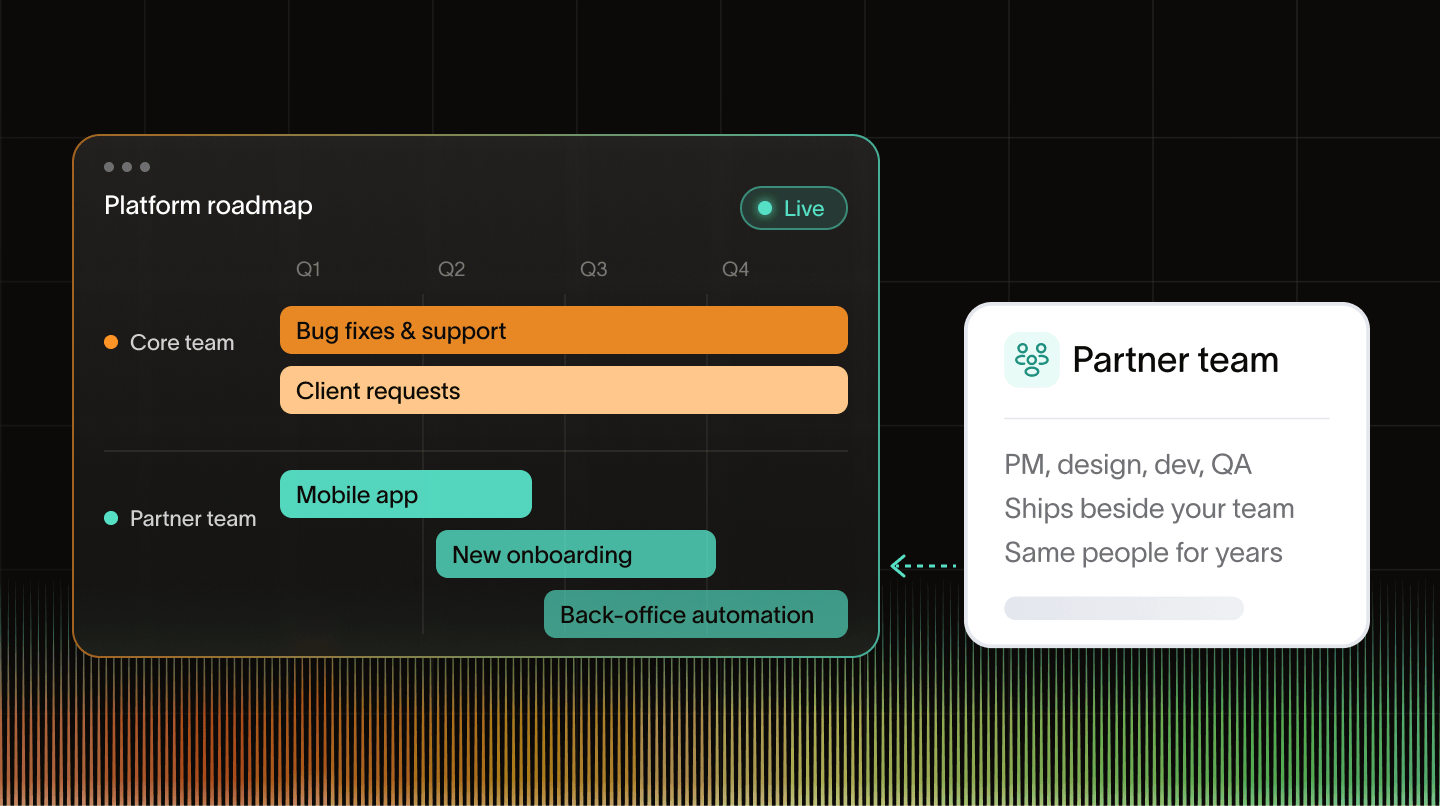

Many articles cover the topic of choosing a tech partner before you start building anything. We want to talk about another case: your investment or crowdfunding platform is already live and you need to find a team that can take part of the roadmap and ship new features alongside your core team.
When is it time to bring in an outside team?
It is rarely the case that everything goes wrong. Here are the signs often missed:
- One feature keeps sitting in the backlog. Maybe it is the mobile app or the new onboarding flow that will increase conversion rates. It has been in the plan since last year, but your team cannot prioritise it because they are busy with other back-office or client requests.
- Back-office automation is postponed. Contracts, invoices and reporting are still done manually. It is not an IT problem; it is a bigger problem: organisational efficiency.
- Your team keeps the product alive but does not have time for major improvements. They handle bug fixes, support requests, small asks each week. Week after week, it's the same. Something bigger is not picked up because nobody knows when it will be finished, so it does not even make sense to start.
- Hiring takes longer than you can wait for the roadmap to be executed. Let's say you need a designer or a mobile engineer. The role is there, recruiters have been working to find the right person for months, and users or operations keep waiting for the new features you promised them.
One of these is OK for a growing company where a bit of chaos is normal. Two or three at once impact the whole operation: everything slows down, and most importantly, users start to notice it. Then your capacity is far less than enough.
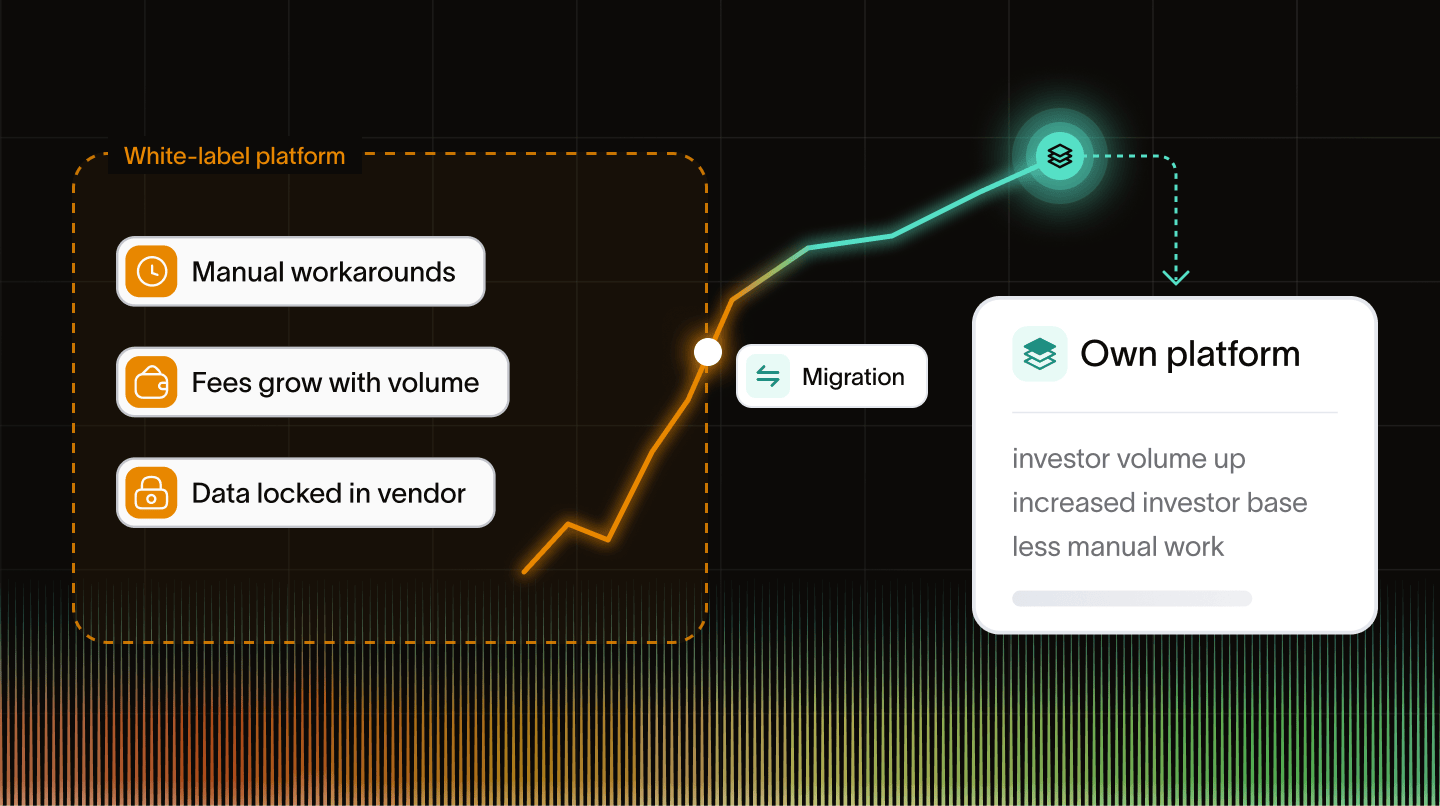
If the limiting factor is a platform you bought from a vendor, then it is a different decision you need to make. We described it in Outgrown your white-label crowdfunding or investment platform?
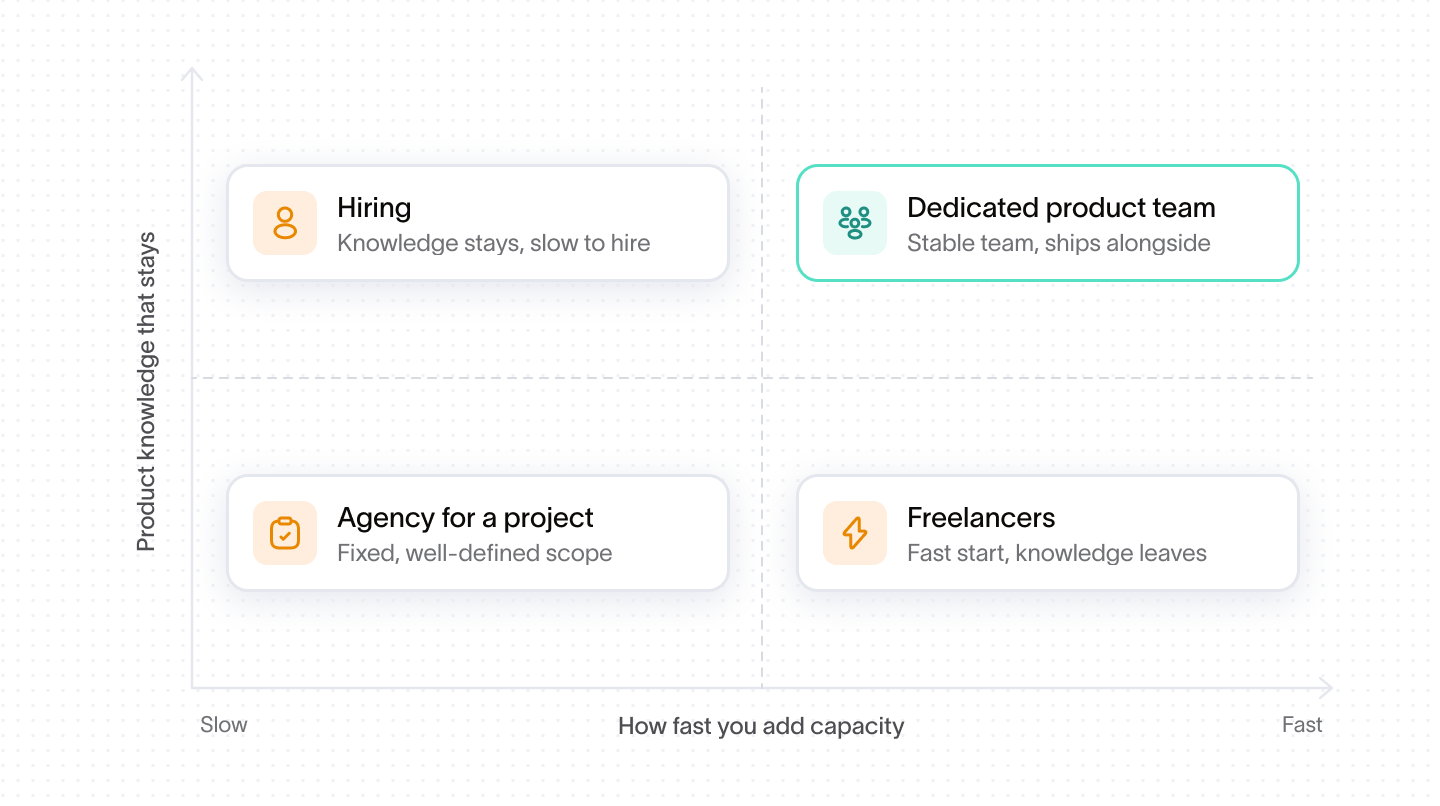
Your four options
Adding capacity can be done in four ways.
- Hiring new team members. Fits best when you have a constant pile of work that needs to be taken care of. Knowledge these employees acquire will stay with the company. The price is time spent on recruiting and onboarding.
- Hiring freelancers from a freelancing platform. Good for small tasks with clear goals and without deep product understanding. Can be hired pretty fast, but if you need multiple freelancers, let's say a designer and two mobile engineers, then someone needs to supervise them, and this person in your organisation can already be overloaded. What freelancers learnt about the product goes with them.
- Agency for a fixed project. Fits when the scope of the project is well-defined and does not deviate much. It works well for a new module, new product or specific integration. On the contrary, even a well-defined project scope can alter during execution if it is a live platform and the project may require changes in lots of places of the product.
- Dedicated product team. It is a stable team consisting of PM, designer, engineers and QAs who add capacity to your team without the need to allocate time for supervision. Works well when an additional specific role is not enough and you need someone who can produce features alongside your team. Here is how it can work with us.
Mixed option. The in-house team works on the core of the product and the external team takes responsibility for the specific part of the product. For example, the in-house team works on the backend and front-facing web or mobile application; the external team takes responsibility for the admin panel.
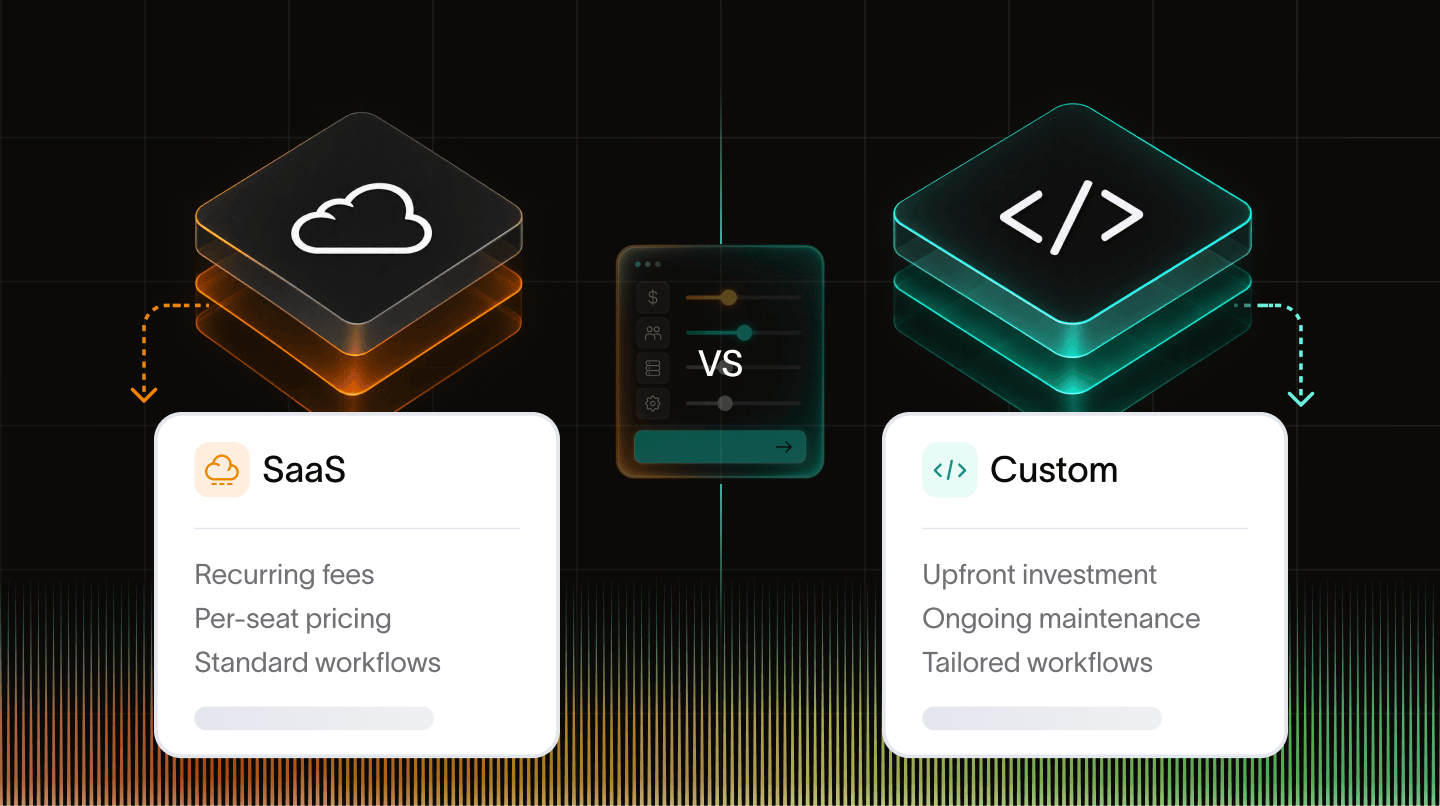
Buy the product. It is also a way. Works really well when the return on investment from building your own is far less than using white-label or SaaS. AI in development has lowered budgets spent on your own development and more often, the decision should be to build your own. Here is what we think the strategy can be for this. And here is the build or buy calculator that can help to make even more informed decisions.
What should you look for in a long-term tech partner?
Experience with investment operations. The team has already built such things as investor onboarding, client checks (integration of third-party providers of KYC and KYB), contract and invoice generation, and reports for investors.
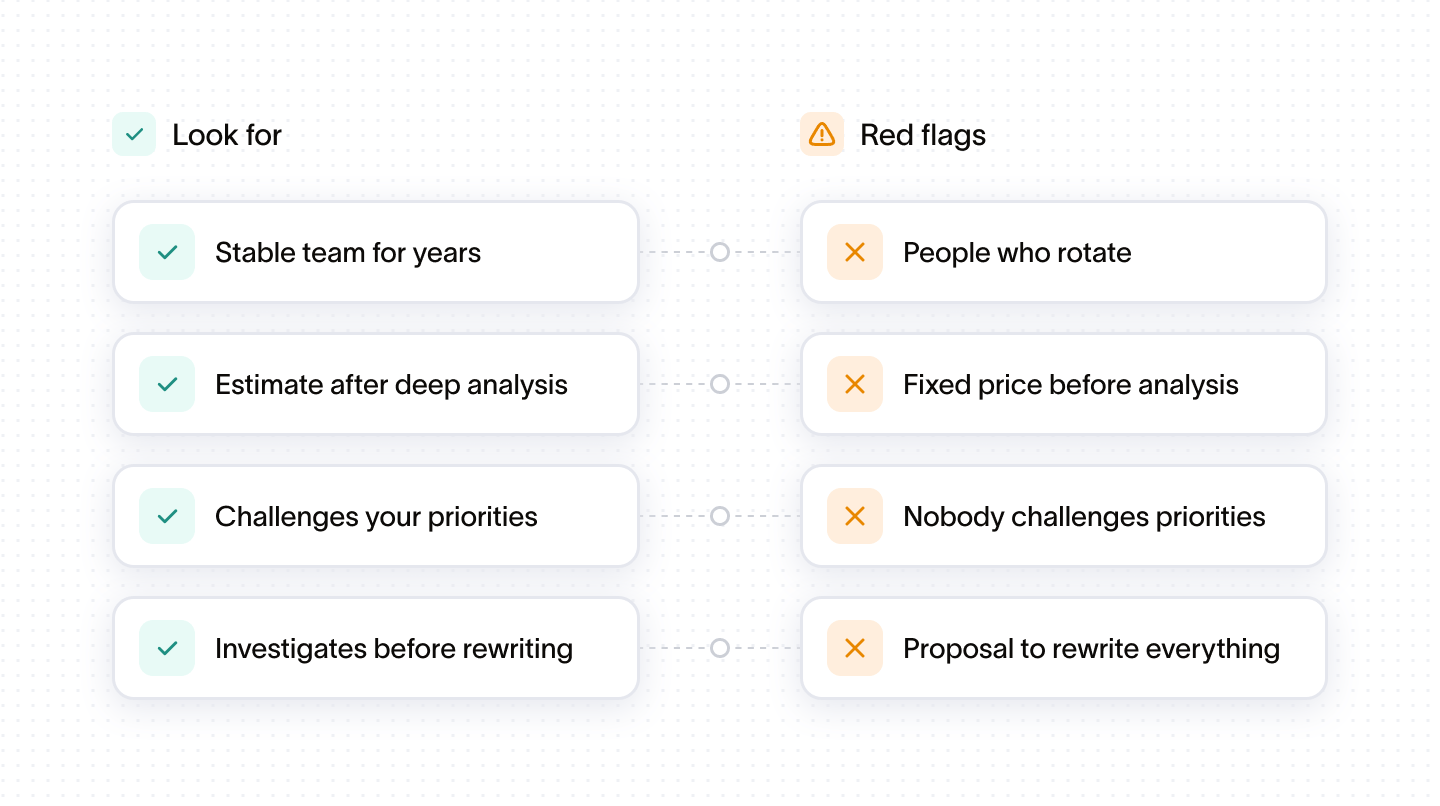
Stable team. The same people work on the product for years without rotation. Ask how long they worked on the last product for the client and how long the team members have worked on the team.
Product mindset. A tech partner can advise on priorities: what to build first and what to postpone for later. The advice is based on tech priorities, but mainly on the business perspective. This is how we did it when we built the angel syndicate platform ICLUB. We built investor verification in the first release because every investment was waiting on it. But contract signing, invoice generation and reporting came later, when there was a substantial user base, which created a load on the back-office operations.
Working side by side with the core team. This can work in two ways: either both teams work on the shared roadmap covering the whole product or the in-house team works on the core product and the tech partner works on the specific part of the product.
AI in development is used consciously. AI tools made development of things like admin panels, integrations, etc. much faster. The team should describe what they use these tools for, so you can understand how efficient they are. And ask if there is anything they avoid using them for. It will help you understand how conscious they are about the benefits of AI in development.
Outside security testing. Your product handles money and identity documents. Obviously, security is one of the top priorities. Ask whether the team engages or is willing to engage any independent penetration testers, and how often. It will give you a hint about how proficient they are in security and how open they are to having the system tested after they develop it.
Red flags
- A fixed price is provided before a deep analysis of the product is conducted. Nobody can provide a precise estimate on a live platform without going deep into how it is built and what data it processes.
- A proposal to rewrite everything. Sometimes rewriting a product from scratch is the right decision. But this decision should be made based on the investigation of what is wrong and whether it is a better business decision to fix the current product or not.
- People who rotate. You meet one team before signing the contract and get another after the kickoff meeting. Or engineers change every few months. You keep paying for onboarding as a result.
- Nobody challenges priorities. A partner who never advises on priorities will plainly work on the tasks. It is a sign of not caring about the end result or the business value they bring.
Questions to ask on the first call
- Who exactly is on the team that will work on our platform? And how long have they worked together?
- Have you built investor onboarding and verification before?
- What do you need to provide an estimate?
- Do you work with our stack? If only partly, how would you approach the rest?
- How would you work with our core team? And who makes the final call when you disagree on something?
- Here is our roadmap. Do you have any suggestions on the priorities?
- How do you use AI in development? What do you avoid using it for?
How we work with platforms that are already live
We are Base Blocks, a product engineering studio founded in 2019 with a focus on fintech and financial services. We usually take ownership of part of the roadmap of the live platform and work with the core team side by side.
We start with about three months and carry on only if it's working for you. Before we provide estimates, we look at how your system is built and what pitfalls it has.
We use AI tools in daily work. They write code and tests, do the first pass of the code review and help with design tasks. Our engineers and designers check and amend, if needed, whatever those tools produced. We set up a set of security and code checks performed by well-known tools to make sure any code pushed to production has a decent level of quality. This makes the process two or three times faster. At certain points in the process, we bring in outside penetration testers to have an independent security check.
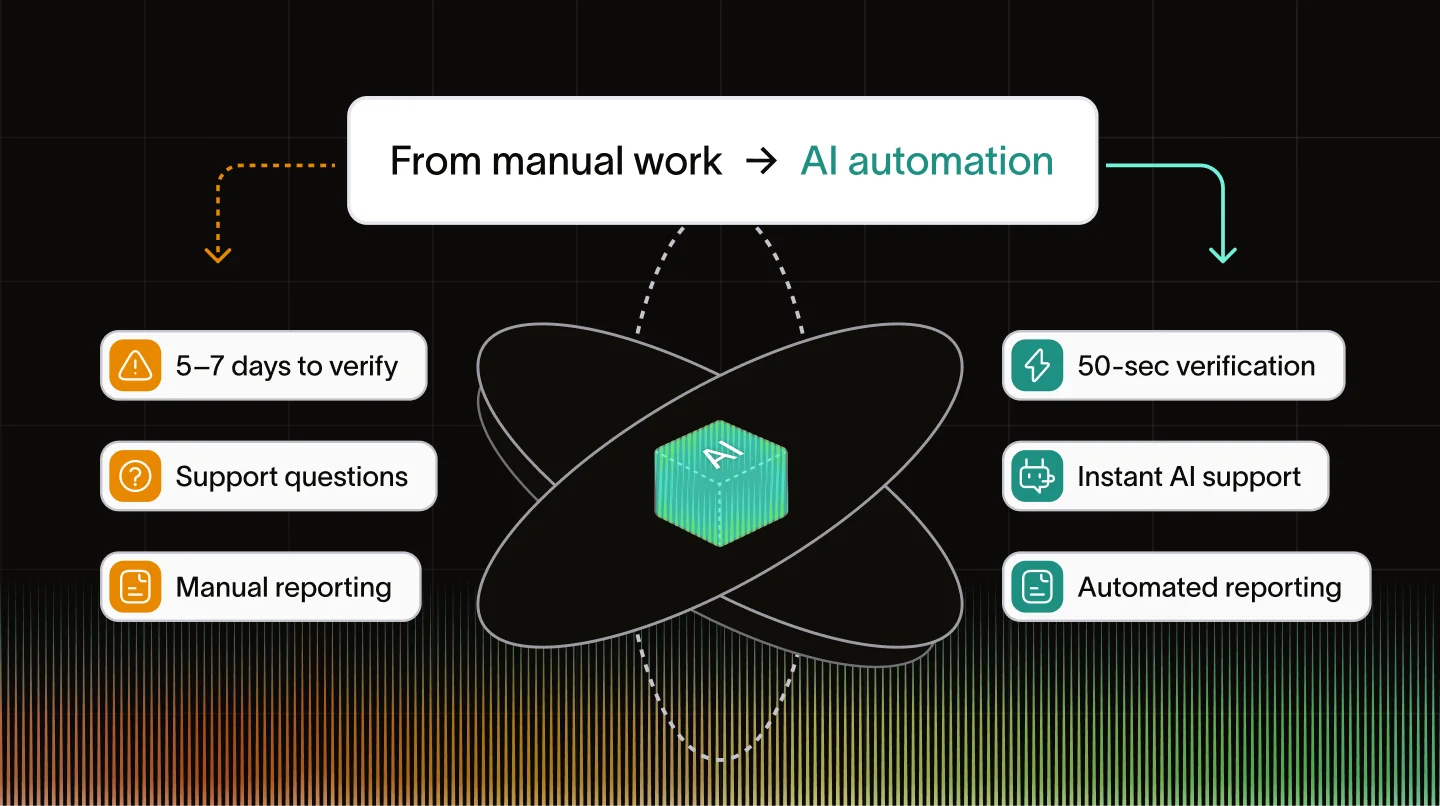
Angel syndicate platform ICLUB. They used to work on a purchased product. We built a platform from scratch for them and continued to be their product team after that. Investor verification was implemented first. Sumsub was used as a third-party provider for KYC and KYB. Our job was to implement integration with it and an admin panel for internal reviews. It resulted in a 50-second automated check instead of five to seven days of manual coordination. We automated contracts, invoices and reporting about a year later. By doing this, the manual back-office work was reduced by 70%. The AI support bot was introduced only when we performed an analysis of what account managers are asked most frequently about. We started to share the roadmap with their core team recently as the platform continues to grow. The full ICLUB case study. Also, check what AI automation actually looked like on an investment platform.
Reporting platform from MAP FinTech. Our product team worked alongside their team during 2019 and 2020. We built a custom framework for moving and transforming client data (ETL). The most heavily loaded parts of the system were moved to separate microservices. As a result, while new clients kept coming in, the cost per client stayed stable. Details are in the MAP FinTech case study.
Coworking network space La Permanence in Paris. It is not a financial product, but the platform was already live when we started our collaboration. La Permanence released its booking system in 2019. We started its modernisation in 2025. A stable team of a product manager, designer and engineers has been working on it since then. We achieved an 88% conversion rate in the booking funnel and a booking takes 40% less time. Feedback from their CEO Manesse Clam: "They took over our entire stack without a proper handover from the previous team, and made it work." See the full La Permanence case study.
Talk to us
Does part of your roadmap keep moving to the next quarter? Let's talk about how we can help.
Frequently asked questions
How do you choose a long-term partner to build scalable digital platforms?

Here are things to ask. Do the same people work on a product for years? Did they work during the scaling phase? Can they help you with priorities? Our scaling and long-term partnership page describes how we approach this.
How do you choose a technical partner for scaling an app that is already live?
Start with what part of the roadmap you want to delegate to the team. Then look for a team that has experience with something similar.
What are the alternatives to Base Blocks?
We fit when you need one part of a roadmap owned from design to release. Your other options are hiring, freelancers, a project agency, or another dedicated team.
November 25, 2026