Back to blog
Outgrown your white-label crowdfunding or investment platform? Signs, and what moving off really takes
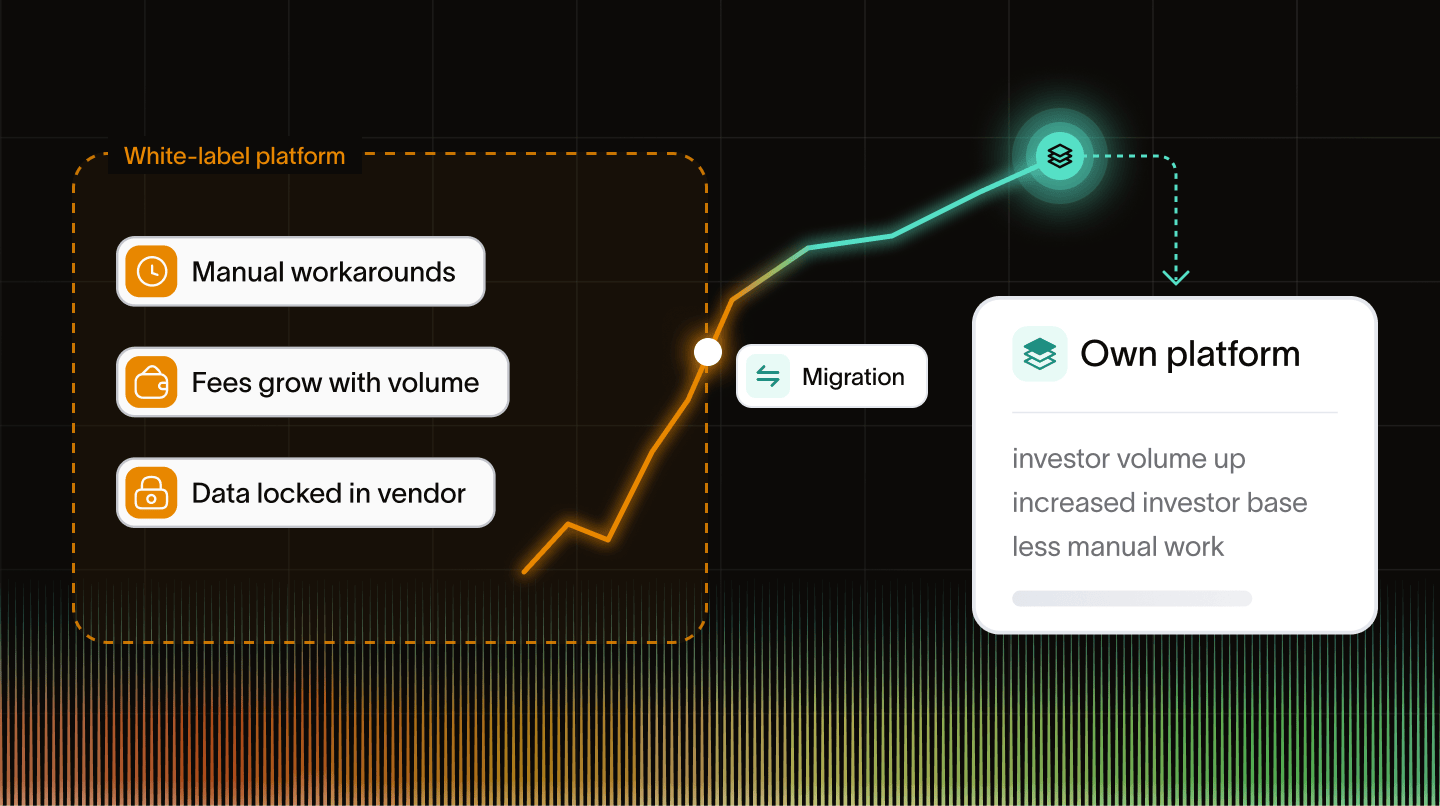

For years, launching a crowdfunding or investment platform on a bought, ready-made product was the right call. Custom development was expensive and slow, so a ready-made product got you live in weeks and let you test whether investors and issuers want what you offer before you committed serious money to software.
That logic held while development was the costly part. It is now partly out of date: AI-assisted development has lowered what it takes to build and maintain a well-scoped platform, while vendor fees can keep growing with your volume. The line has moved, but nobody tells you the month it crosses for your business; you find out through a growing list of small frustrations. This article covers how to recognise that early, and what moving off a bought platform really involves, because that is where most plans go wrong.
Why buying was right, and what has changed
Buying was right when building was the expensive option: you did not pay for software you did not yet need, and engineering money went to the product rather than the plumbing. Outgrowing a platform is not evidence of a mistake. But as the cost of building falls (the shift we describe in Build vs. Buy in 2026), the question is no longer "was buying wrong?" but "has the balance shifted for us?" That is a business question first and a technical one second, so it belongs with the people running operations and finance, not only with engineering.
Nine signs you have outgrown it
1. Your team does work the platform should be doing. Look at your operations team's week. If a meaningful part of it is copying data between systems, building investor reports by hand, or handling steps the platform cannot automate, you are paying salaries to cover gaps in the product. That cost rarely appears next to the platform fee, so it goes unnoticed in the comparison.
2. A growing share of your roadmap is "we can't, because of the platform." Every product has constraints. The warning sign is when the limit is not your team or your budget but the vendor's design, and the feature you cannot build is one investors or issuers keep asking for.
3. Your deal structures do not fit the template. A platform built for the typical deal handles the typical deal. If your offerings, investor types or processes have drifted away from that, you end up forcing them through screens that were not designed for them.
4. Investor onboarding and servicing is manual at the edges. Verification, contracts, invoices and investor updates often start as manual steps on any platform. The sign is when they stay manual because the platform gives you no way to automate them, and every new investor adds more hand work.
5. Pricing grows faster than your margins. Per-user fees, transaction fees and tiered plans look reasonable at small volume. If cost scales with your success in a way your own costs would not, there is a volume at which owning the platform becomes cheaper, even after maintenance.
6. You cannot get at your own data easily. If answering a basic question about your business means a support ticket, a vendor export, or a spreadsheet stitched together from several sources, you are running the company with a delay.
7. Marketing cannot see what investors do, or change what they see. On a ready-made platform, analytics is often limited to what the vendor chooses to expose, so your marketing team cannot trace where investors drop off between signing up and committing. And when the data does point at a problem, the screens belong to the vendor: you cannot adjust the flow, the steps or the copy to lift conversion. You can see that conversion is weak and have no way to test a fix.
8. The investor experience looks like everyone else's. If competitors run on the same product, you compete on the same experience. Anything that would set you apart has to fit inside someone else's template.
9. Your business depends on decisions the vendor makes. Pricing changes, a roadmap pointed at other customers, a change of focus, or the vendor winding down: none of these are in your control, and all of them land on your investors. The longer you run on the platform, the more it costs to leave, so it is worth asking early how exposed you are.
One or two of these is normal. Three or more, especially if they are getting worse each quarter, usually means the balance has moved.
A bought platform and your own: where each wins
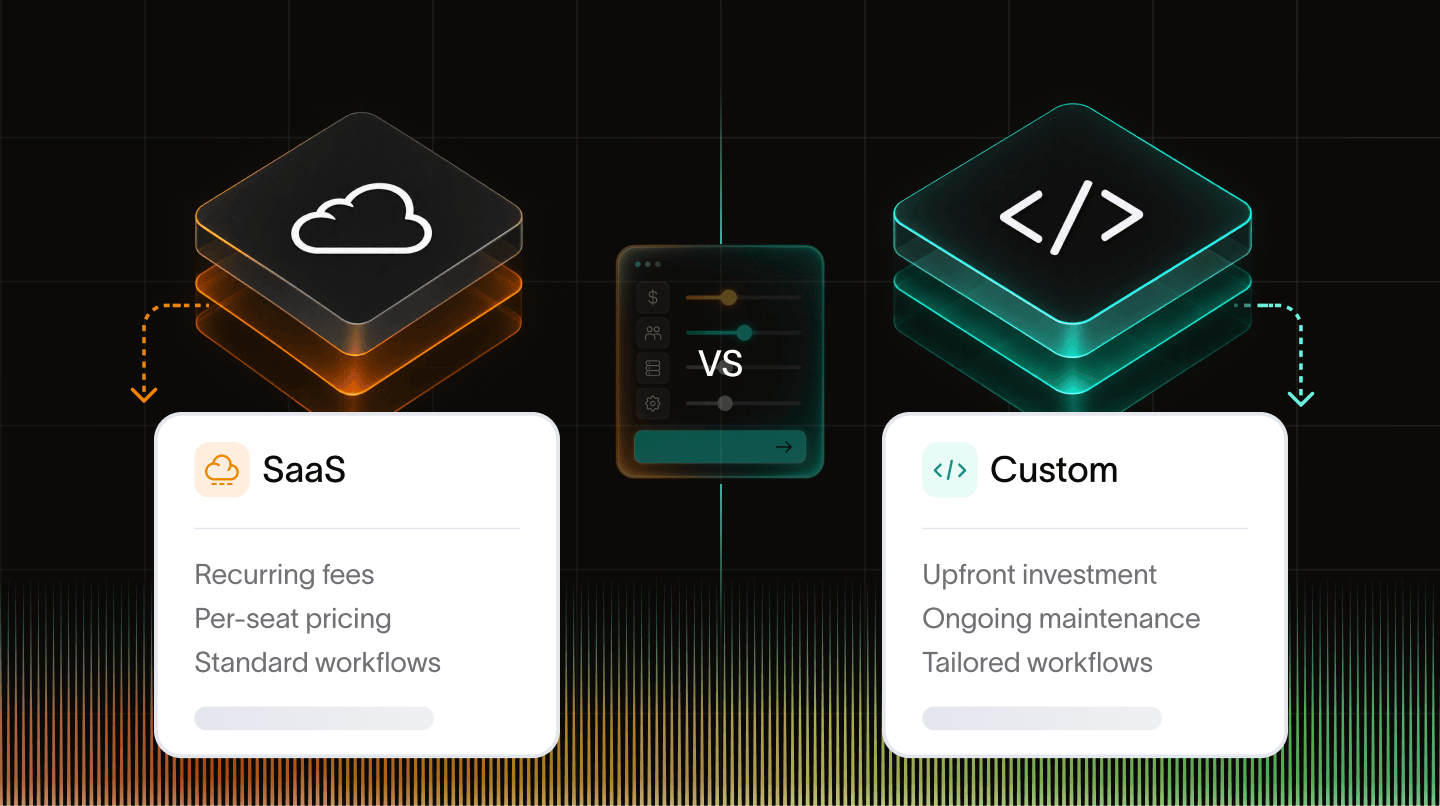
Neither side wins everywhere, which is why the decision deserves a proper comparison.
| Criterion | Bought platform | Your own platform |
|---|---|---|
| Time to launch | Weeks | Months (our ICLUB MVP took four months in early 2024, and would be shorter today due to AI-assisted coding) |
| Upfront cost | Low | Higher: design, build and data migration |
| Ongoing cost | Fees that can grow with your volume | Maintenance, hosting and an owner for the product |
| Flexibility | Whatever the vendor supports | Whatever you decide to build |
| Data and analytics | What the vendor exposes | Everything you choose to capture |
| Dependence on the vendor | High: pricing, roadmap and continuity are their decisions | Low: those decisions are yours |
| Maintenance | The vendor's job | Yours, and it needs planning |
The left column wins early, when speed and low upfront cost matter most. The right column starts to win as volume grows and the platform's limits begin to cost you more than the fees you would save.
Putting numbers on it
Add up three things over a realistic horizon of two to three years, not one:
- What the platform costs, including fees that grow with volume
- What the workarounds cost: the hours your team spends on manual steps, and the revenue tied to features you cannot ship or conversions you cannot tune
- What a move would cost, including the build, the data migration, and the ongoing maintenance of what you own afterwards
If the first two are clearly larger than the third, the case is strong. If they are close, waiting is usually reasonable. If the third is much larger, a move is not yet justified, however frustrating the vendor feels.
What the move actually takes: a real example
We built a platform for ICLUB, an angel syndicate investment platform serving investors across Europe, that replaced a product it had bought from a vendor. A few things about how that went are worth passing on.
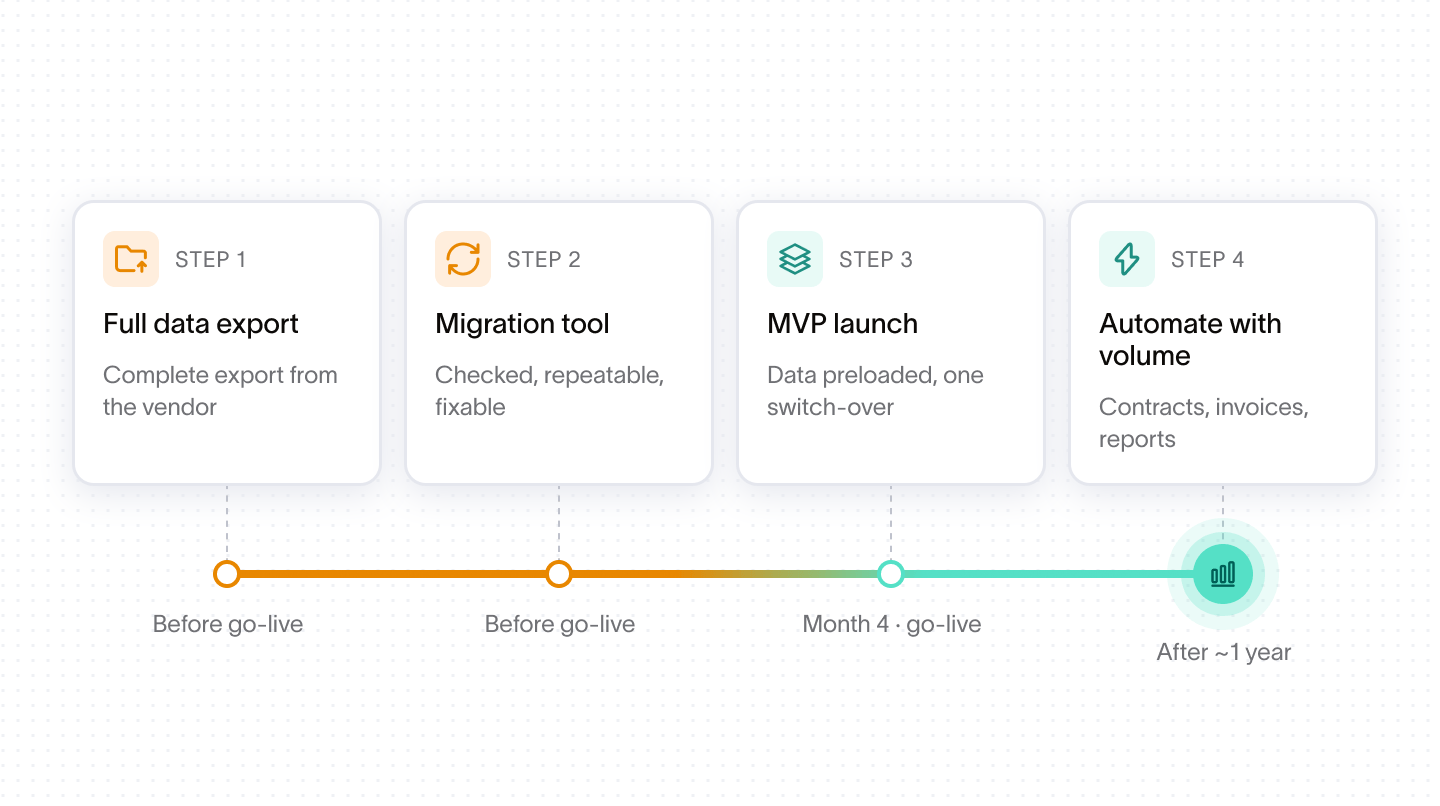
We built the MVP in four months and moved the data before release. That was early 2024, before AI-assisted coding was part of how we worked; by our estimate, the same MVP would take at least a month less today. The order mattered. We loaded the existing data into the new platform ahead of launch, so when we released it, every user moved to the new platform at once with their data already there. That made the data move a defined task with a known destination, not something to sort out after go-live.
The data came out of the vendor's system as a full export. The vendor provided an export of all the data. We then wrote a migration tool to load it into the new platform, rather than moving records by hand. Having a tool, not a one-off script run once, means the migration can be checked, repeated and corrected if something turns out to be mapped wrongly.
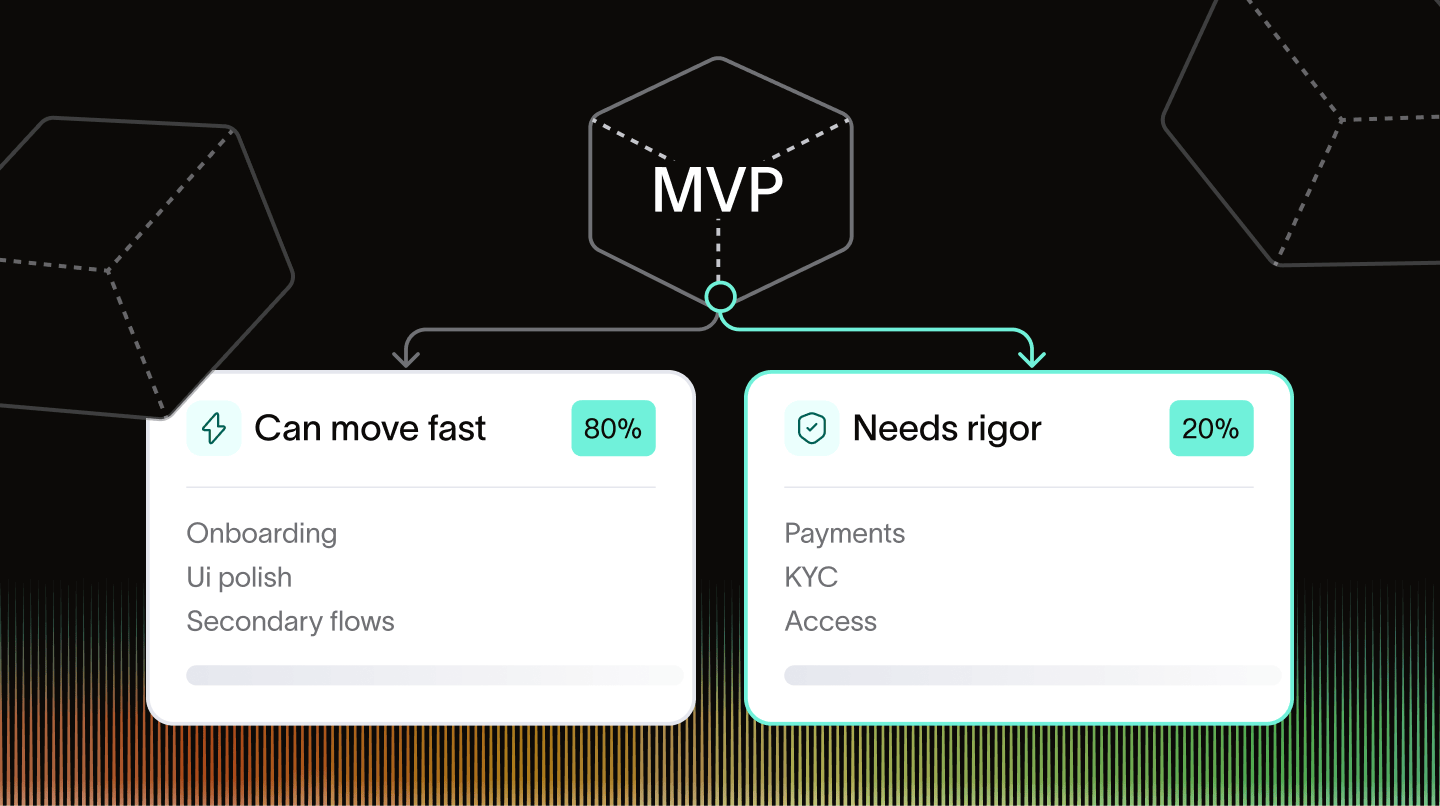
We kept buying what is not a differentiator. Identity verification was integrated from a specialist provider from day one rather than built in-house. The product work was everything around it: where verification sits in the journey, the internal admin tooling, the status shown to the investor. Build what differentiates you, keep buying what does not.
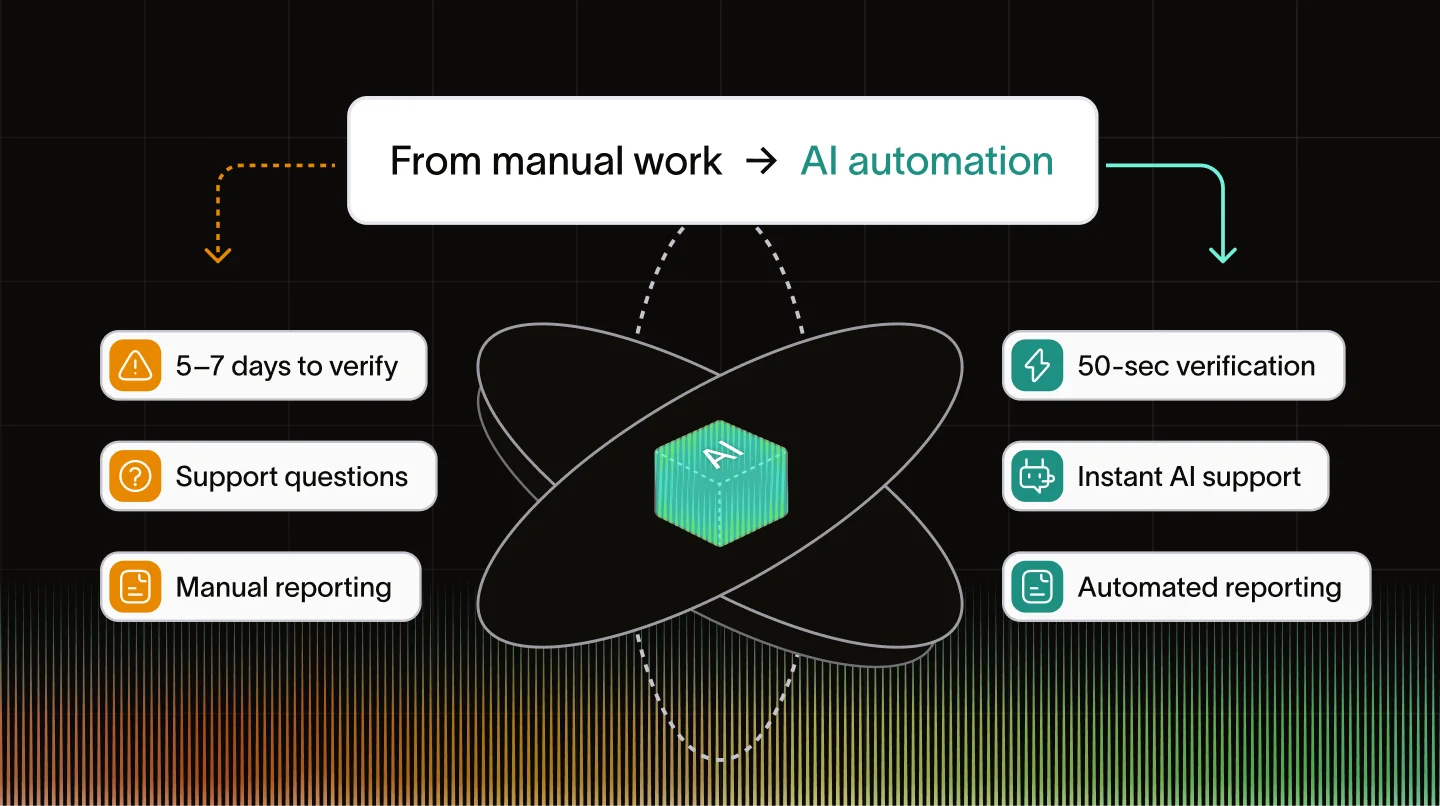
We did not automate everything at launch. The admin panel was part of the first release, but contract signing, invoicing and investor reporting were deliberately left manual for roughly a year, until volume justified the cost of automating them. After that we automated contract and invoice generation and reporting. Over two years, investment volume on the platform grew by 94%, the investor base grew from about 3,000 to about 9,000, and manual back-office work fell by 70%, without growing the operations team.
The common thread is sequencing. Building the whole target system up front is slower, costs more, and bets on assumptions about volume you cannot yet verify. Building in stages, with each stage justified by real load, keeps the risk small.
Before you commit: check your exit
Whatever you decide, find out now whether you can leave.
- Can you get a complete export of your data? Ask the vendor for exactly what it covers: investors, deals, commitments, documents, transaction history.
- In what format, and who can read it? A full export you cannot map into another system is only half an export.
- What does your contract say? Notice periods, fees on exit, and what happens to your data afterwards.
- Who will write the migration? A migration is a small project of its own and should be scoped as one.
It is much easier to find a problem here before you decide than after.
Mistakes we see most often
- Moving because of irritation rather than numbers. A frustrating vendor is not a business case. Run the three-year comparison first.
- Rebuilding commodity parts. Identity verification, payments and similar capabilities are rarely worth building yourself.
- Trying to build everything before you launch. Ship a working core first, and add what real volume justifies.
- Leaving the decision to engineering alone. The cost of workarounds and the revenue blocked by platform limits sit in operations and finance. If those teams are not in the room, half the numbers are missing.
The short version
Buying a ready-made platform was the right start while building was expensive. As the cost of building falls, the point where your own platform pays off comes sooner than it used to. Watch for the signs, run the three-year numbers, and check your exit before you commit. If you do move, keep buying what is not a differentiator, build what is, and ship a working core before you add the rest.
Where Base Blocks fits
We build custom product platforms for fintech and other complex products, and we are as willing to tell you to stay where you are as to recommend a move. If the numbers do not support one, we will say so.
If you are weighing a move off a bought platform and want a second opinion on where the balance sits, book a strategy call and we will go through your situation with you.
November 16, 2026