Back to blog
What AI Automation Actually Looked Like on an Investment Platform
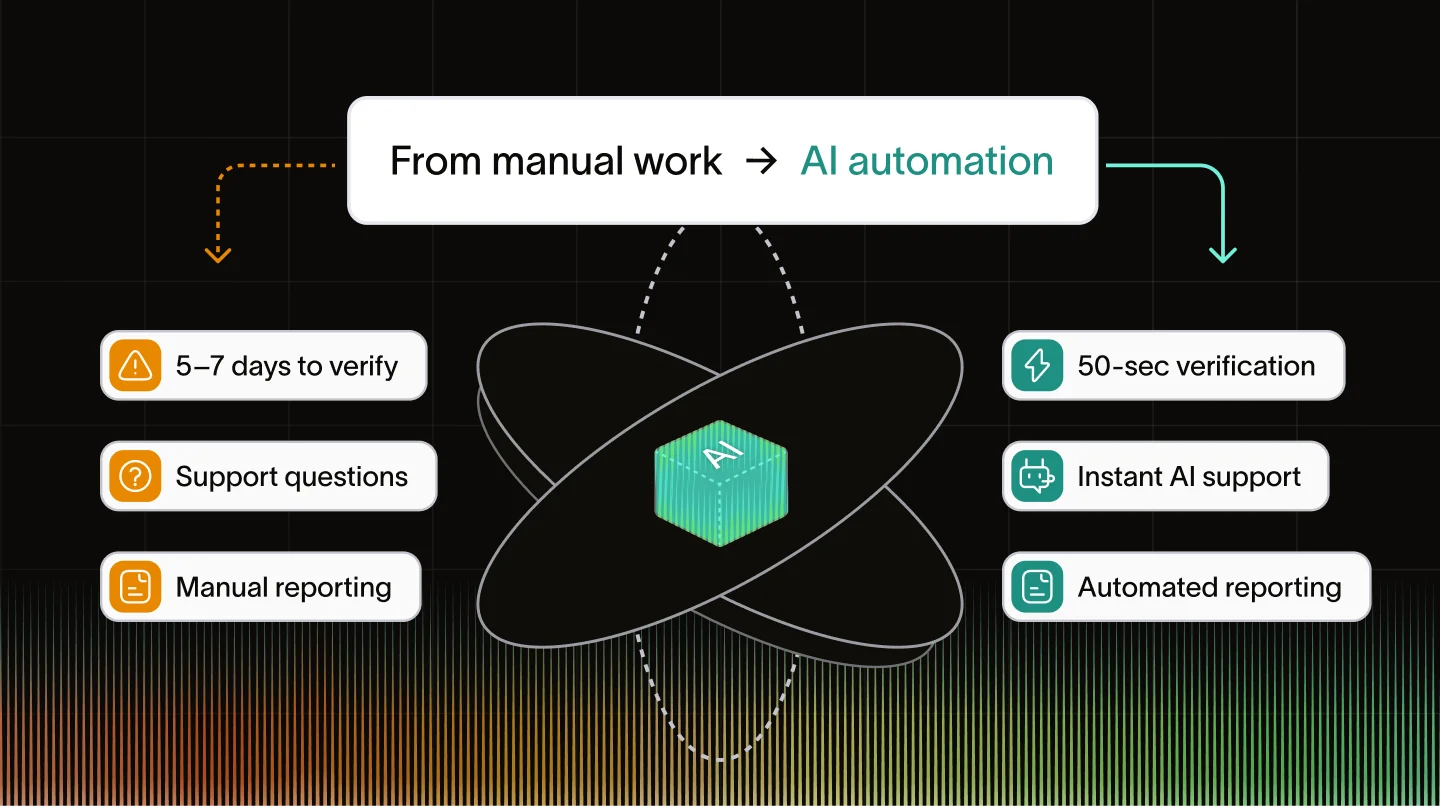

Most writing about AI in fintech stays at the level of what's theoretically possible. This one is about a specific product, three specific manual processes, and what changed after we automated them.
The product is ICLUB, an investment platform where members browse and commit to deals, then pass identity verification before a commitment becomes an actual investment. When we started, three things on that platform ran on human effort: verifying investors, answering routine investor questions, and producing reports. None of them were hard problems. All of them were slow, and all of them scaled badly as the member base grew.
Verification: from five days of waiting to under a minute
Verification was the worst of the three. KYC review was taking five to seven days. That delay lands at the single worst moment in the product: the investor has already decided to commit, and now their commitment sits pending while someone works through a review queue. A meaningful share of them lost momentum before it cleared.
Worth being precise about who did what here, because it matters for anyone planning similar work. The verification itself, document authenticity, identity matching, sanctions and PEP screening, comes from a specialist third-party provider. We didn't rebuild that, and you shouldn't either. Regulated identity verification is a mature, heavily-invested product category, and a custom build would have been slower, more expensive, and less defensible in front of an auditor.
What we built was everything around it, which is where the actual product work lives:
- Placed verification at the commitment point, inside the product. Members register and explore the platform freely. KYC is triggered when they commit to a deal, which is the moment it's actually required, and it runs inside the product journey instead of sending them off to a disconnected portal. Nobody is asked to hand over an ID before they've decided they want to invest.
- Integrated the provider's mobile SDK, so document capture and liveness checks happen natively in the app instead of pushing the member out to a desktop browser midway through committing to a deal.
- Built an internal review dashboard for the team handling verification results, so anything the automated checks flag gets reviewed in one place with full context attached, rather than across email and vendor portals.
- Added verification status badges on the app's main screen, so a member with a pending or incomplete verification sees it immediately and knows exactly what's outstanding, rather than discovering it only when their commitment fails to progress.
The result: investors who used to wait five to seven days for their commitment to be confirmed now clear verification in roughly 50 seconds when the automated checks come back clean.
That last bullet matters more than it looks. When verification sits between a commitment and a confirmed investment, silence is expensive. A member who doesn't know their verification is incomplete assumes the platform is slow, not that the ball is in their court.
The support bot and reporting: same problem, different workflow
Once verification was handled, the same pattern showed up elsewhere on the platform.
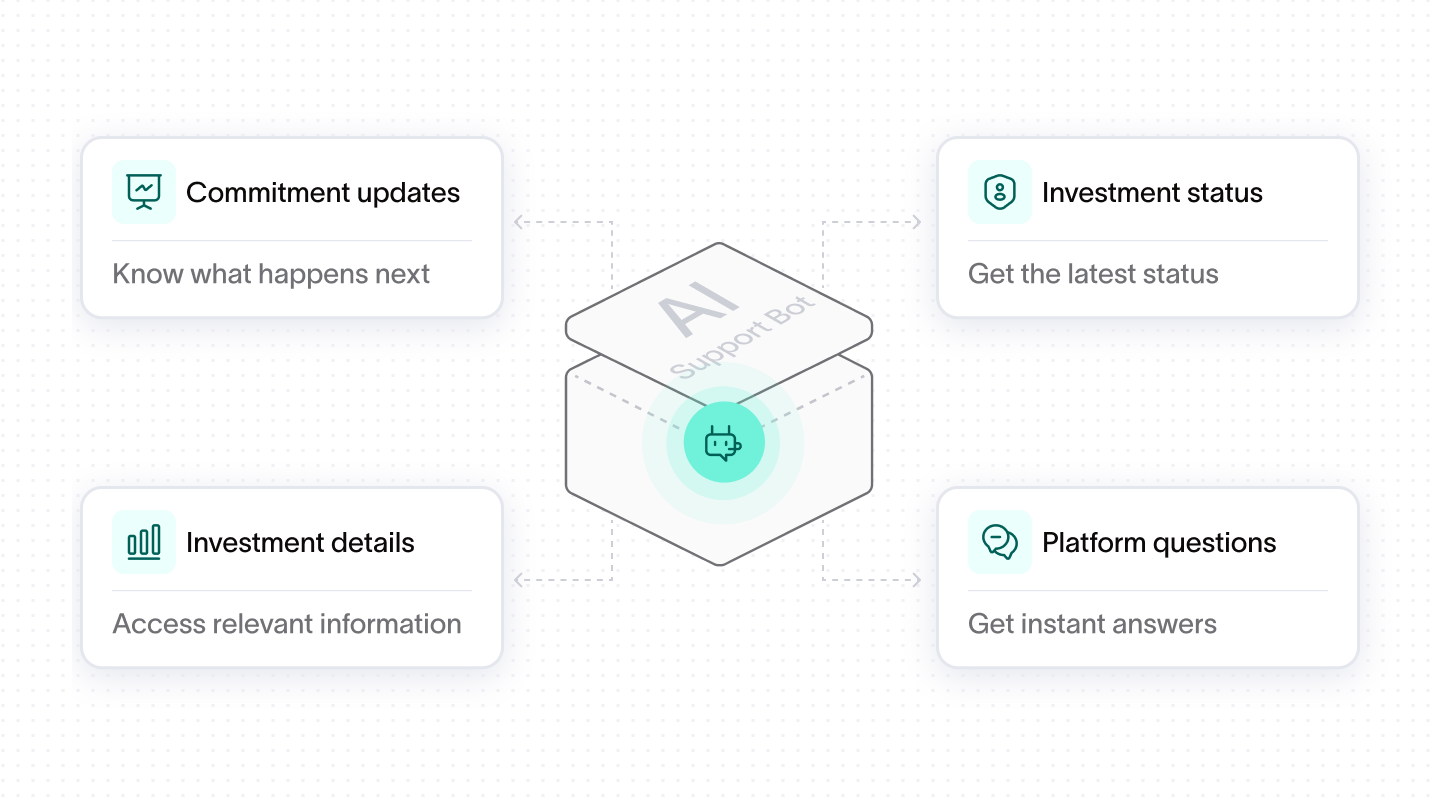
Investors asked the same questions repeatedly, about their investments, the platform mechanics, and where their commitment stood. Each one consumed someone's attention for a few minutes. We built an AI support bot with access to the platform's data, so members get answers to routine questions immediately instead of waiting on a support queue.
Reporting had the same shape. Investor updates and analytics reports were assembled by hand, which meant they went out on whatever cadence someone had time for. We added AI-generated reporting and automated investor communication, so updates go out reliably without someone drafting each one.
Three different workflows, one underlying situation: a repetitive, well-defined task that a person was doing because nobody had gotten around to automating it.
What made these automations trustworthy
Speed on its own isn't the interesting part. A system that auto-approves everything would post excellent processing times and create a compliance problem. A few things mattered more than the headline number:
A real escalation path. Automated approval only applies when every check comes back clean. Mismatches, low-confidence scans, and screening hits route to a human, with the automated findings attached so the reviewer starts with context rather than from scratch. The review dashboard exists specifically to make that path fast.
An audit trail on every decision. Every verification outcome carries a record of what was checked and why it passed or failed. That's a compliance requirement, and it's also what makes it possible to find and correct a bad automated decision after the fact.
Buying where buying is correct. Verification came from a provider. Orchestration, UX, review tooling, and the prompts that get users to complete the process are product work, and that's what we built. Knowing which side of that line a given piece falls on saves months.
Security handled as part of the build. Identity documents and financial data need proper access controls and handling throughout, not just in storage. For fintech work we commission third-party penetration testing before anything regulated goes live.
Where this applies beyond one platform
The pattern generalizes further than KYC. Anywhere a person is checking documents, cross-referencing data sources, answering the same question repeatedly, or assembling a report by hand, there's usually a version of this available: reconciliation between financial systems, classifying transactions or support requests, extracting structured data from unstructured documents, routine reporting that eats half a day.
The win in each case isn't replacing the person. It's handing over the well-defined bulk of the task and leaving the judgment calls and the exceptions where they belong.
Where Base Blocks fits
We build AI features into real product workflows, with the security and compliance work fintech requires, including third-party penetration testing before regulated features go live. We're equally willing to tell you when the right answer is integrating someone else's product rather than building your own.
If a manual process on your platform is quietly costing your team days per case, book a strategy call and we'll look at where automation would actually move the needle.
August 12, 2026